
The ride home is the hardest part of the night
On most nights guests leave over a few hours. On New Year’s Eve they leave together, late, and many of them after a drink. 3 things stack up at the close:
- Everyone leaves at once. Many large New Year’s Eve events in the US end at 2 or 3 AM. Decadence Arizona, for example, ends at 3:00 AM each night, according to its FAQ.
- The car cannot stay. The same FAQ says there is no overnight parking and cars left behind are towed at the owner’s expense. A guest who planned to leave the car and take a ride home has to plan again.
- Rideshare peaks in the same few minutes. Thousands of requests land together, so waits get long and prices go up, and festival guides for this New Year’s Eve tell guests to expect it.
Transit helps only where it still runs at that hour, so check the holiday schedule before you tell guests to count on it.
What organizers usually do, and what it misses
| PairMee ride board | Shuttle buses | Rideshare zone | Group chat | |
|---|---|---|---|---|
| Who it serves | Guests from any area where someone is driving | Guests near 1 pickup point | Anyone who can get a car at the close | Whoever is in the chat |
| Leaving time | Each driver sets the time | 1 or 2 fixed departures | Whenever a car comes | Whoever answers late at night |
| Cost to the guest | Free; people in a car split gas if they want | A ticket, usually | The fare at peak prices | Free |
| Phone numbers | Never shown; people talk in the app | On a passenger list | Shared with the driver | Visible to every member |
| What you learn | Who still needs a ride home, by area, before the night | Seats sold | Nothing | Nothing |
None of these is wrong. Shuttles are the right answer where many guests start from 1 place, and a rideshare zone is a must. The gap is the guests in between: spread across the city, without a car, not near a shuttle stop.
How a ride board covers the gap
Your event gets its own page, in your look, linked from your ticket email and your FAQ. Guests who drive post their free seats there and back. Guests who need a ride list where they leave from and ask to join. The driver approves every request, and the people in the car agree on the pickup point in the app, so nobody’s phone number is shown.
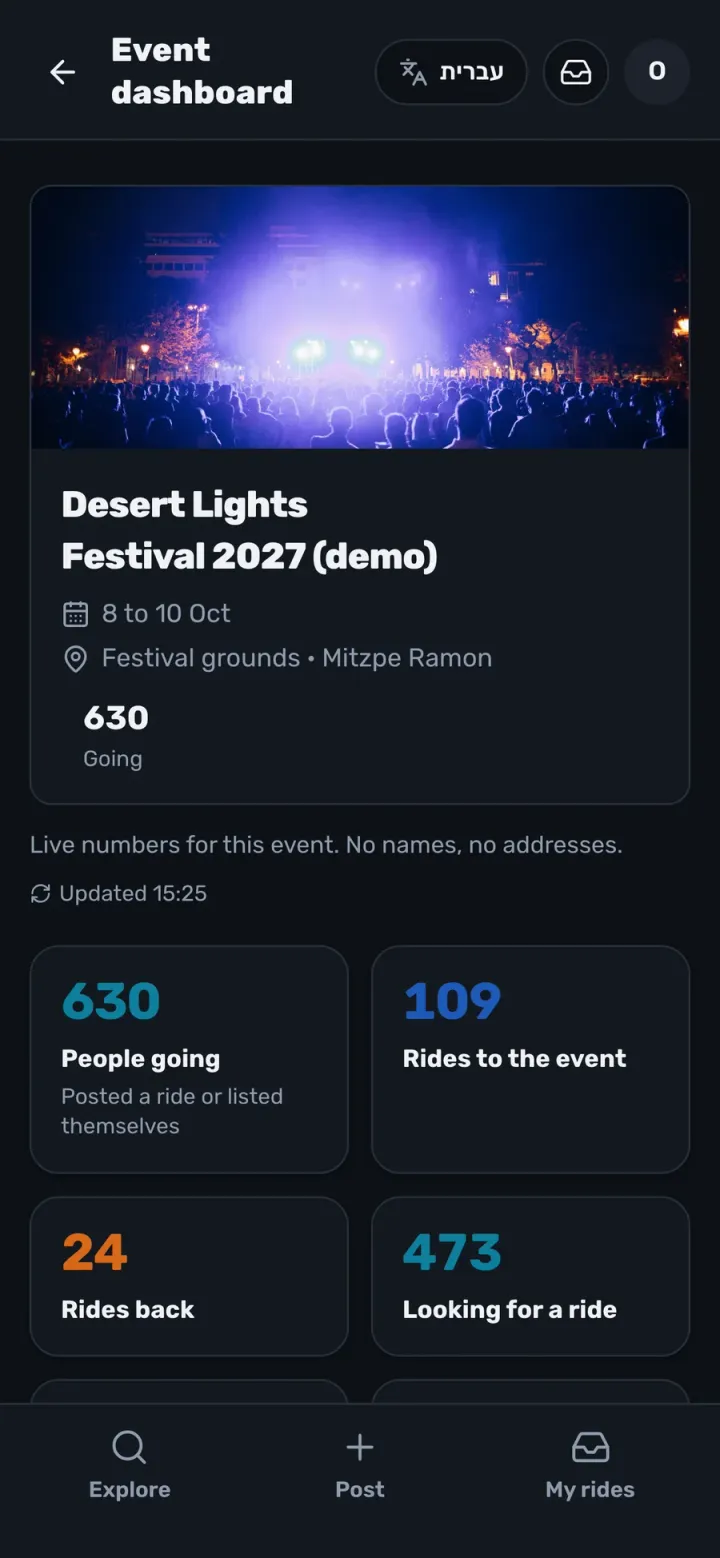
You see a live dashboard with numbers, never names: people going, rides there and home, and the people still looking for a ride, by area. That map tells you where a shuttle would actually fill before you book it.
What it costs and how fast it goes live
Your first event is free. After that a single event starts at $299, confirmed in writing after a short call. Guests pay PairMee nothing, and PairMee takes no cut. A board is live within 1 working day after we receive your artwork and the date, so there is still time before December 31.
What we can show, and what we cannot yet
PairMee is now taking US events, and no PairMee board has run in the US yet. Our pilot ran at KAN Festival in Israel in October 2026, a 3-day festival at a remote desert site where the hardest ride was the one back.

Pilot, October 2026
KAN Festival in the Judean Desert, with a PairMee ride board
The organizers sent a banner and their ticket link. We built the event page; they added a button to their website and a line to their FAQ. Nothing else was asked of them.
The full numbers and what we learned619
people opened the board
350 from 1 button on KAN's site
46%
of the 68 who joined found a ride together
31 of the 68 who posted a ride or listed themselves as looking
31
people found a ride together
18 got a seat in a car, 13 drivers had company
45
At least 45 people looked for a ride, and we mapped where each of them was coming from
26 were looking for a way to get there from Tel Aviv, but only 7 drivers left from there
A match: a person without a car found a driver from their area, and the driver approved them. Figures from our production data, test accounts excluded.